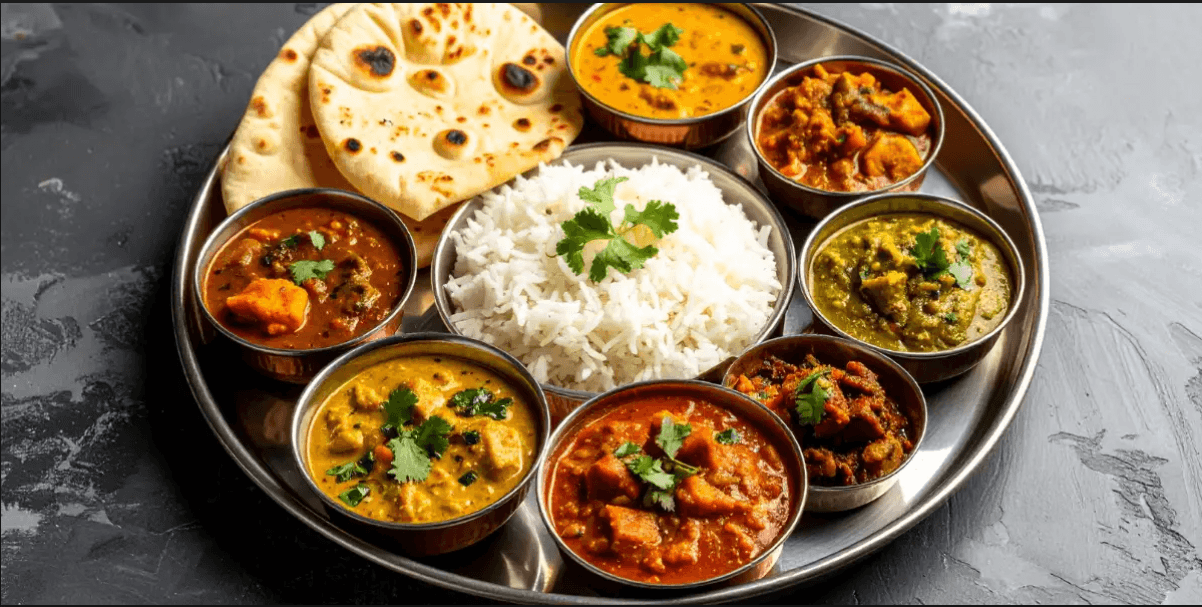
Street food is a window into the soul of a culture. It carries history, traditions, and memory all in one bite. Indian and Pakistani street food, in particular, has earned a loyal following far beyond South Asia. Today, you can find samosas in London supermarkets, biryani on menus in New York, and pani puri stalls in Melbourne.
The global ethnic food market was valued at around $92.76 billion in 2025 and is projected to reach nearly $179 billion by 2034. A large share of that appetite belongs to South Asian flavors.
The global street food market alone stood at $249.55 billion in 2024, growing at 8.5% annually. These are not just snacks. These are cultural exports that have traveled with generations of South Asian communities and now sit comfortably on plates across six continents.
Here are 12 iconic Indian and Pakistani street foods the world has come to love.
1. Samosa
Few snacks have traveled as far or stayed as beloved as the samosa. Its earliest written mentions appear in 10th-century Arabic and Persian texts, where it was known as “sanbusag,” which is a stuffed triangular pastry enjoyed in Central Asian royal courts.
The dish traveled south along trade routes and arrived in the Indian subcontinent, where it was deep-fried and adapted with local spices and potato fillings after the Portuguese introduced potatoes to India in the early 17th century.
Today, samosas are sold in supermarkets across the UK, Canada, the US, and the Gulf. You find them at South African snack stalls, in Nigerian party spreads, and at British afternoon tea shops.
The filling changes by region. It can be mixed vegetables, mince, cheese, spinach, potato, or lentils. However, the crispy triangular shell remains constant. Its adaptability is exactly what has made it one of the most globalized snacks in the world.
2. Biryani
Biryani is not just rice. It is a slow-cooked layered dish of aromatic basmati, marinated meat, saffron, and whole spices that takes hours to prepare and seconds to disappear. The word comes from the Persian “birian,” meaning “fried before cooking.” The Mughal dynasty introduced it to Northern India, and regional kitchens in Hyderabad, Lahore, Karachi, Kolkata, and Lucknow each claimed it and made it their own.
Hyderabadi biryani is traditionally prepared using the “kacchi” method, in which raw marinated meat is layered with partially cooked rice and then slow-cooked together until both are fully done.
Sindhi biryani adds green chilies and dried plums for a sour edge. Bombay biryani folds in fried potatoes. Each version has its champions.
Among popular non-vegetarian dishes served abroad, chicken biryani consistently ranks among the most ordered. It appears on menus from Birmingham to Dubai to Sydney, and its presence in every major South Asian restaurant worldwide speaks to its status as the undisputed king of rice dishes.
3. Pani Puri (Gol Gappa)
Pani puri goes by many names: gol gappa in North India and Pakistan, puchka in West Bengal, and gup chup in Odisha. The concept is the same everywhere: a hollow, crispy puri shell filled with spiced water, tamarind chutney, chickpeas, and mashed potato, eaten whole in one satisfying burst.
It is believed to have originated in Uttar Pradesh and spread across the subcontinent over generations. Today, pani puri stalls are a staple at weddings, fairs, and festivals across India and Pakistan. Globally, the dish has found a home in diaspora communities in the UK, US, and Middle East, where South Asian families keep the tradition alive. The dramatic combination of crunch, tang, spice, and cold water makes it one of the most memorable street foods anyone tries for the first time.
4. Chaat
Chaat is less a single dish and more an entire category of South Asian street food. The word comes from the Hindi verb “chaatna,” meaning “to lick” — a nod to how good it tastes. Chaat includes bhel puri, dahi bhalla, aloo tikki chaat, papdi chaat, and dozens of other combinations. Every version balances salty, spicy, sour, and sweet in one small plate.
What makes chaat stand out globally is its bold layering of textures. Crispy papdi, soft chickpeas, cool yogurt, and hot tamarind chutney all arrive together. Chaat stalls are now a fixture in Indian and Pakistani neighborhoods across North America and Europe. Food festivals in cities like Toronto, London, and Houston regularly feature chaat counters that draw long queues from curious non-South Asian food lovers as well.
5. Chicken Tikka
Chicken tikka has deep roots in tandoor cooking, a tradition that stretches back over 5,000 years in the Indian subcontinent. Small, boneless pieces of chicken are marinated in yogurt, turmeric, cumin, coriander, chili, and ginger, then cooked at high heat in a clay tandoor oven until the edges char and the inside stays tender.
Legend says the Mughal emperor Babur requested his chefs to serve traditional tandoori chicken without bones, giving birth to what we now call tikka. Today, chicken tikka is found at roadside BBQ stalls in Lahore and Peshawar, at restaurant sizzler plates in Delhi, and at thousands of South Asian restaurants worldwide. Its British cousin, chicken tikka masala, became so popular in the UK that it was once informally called a British national dish, a fitting testament to how deeply South Asian flavors have entered global kitchens.
6. Paratha
The paratha is a layered flatbread made from whole wheat flour, shallow-fried in ghee or oil until it becomes flaky and golden. Its name combines two words: “parat” (layer) and “atta” (flour). Although its roots trace back to Peshawar in present-day Pakistan, it spread across the entire subcontinent and exists in hundreds of regional forms.
A plain paratha with chai is a morning ritual for millions of families. Stuffed versions carry fillings of spiced potato, cauliflower, radish, or paneer. In Punjab, it is traditionally paired with lassi, a cold yogurt drink.
Internationally, frozen parathas have become a grocery staple in South Asian stores across the US, Canada, the UK, and the UAE. The South Indian version, parotta, has its own cult following in Southeast Asia.
7. Haleem
Haleem is a slow-cooked dish of wheat, barley, lentils, and tender meat, usually beef or lamb, blended together over several hours into a thick, porridge-like consistency. It requires patience and technique. The result is a deeply savory, protein-rich dish that has been called a complete meal in a single bowl.
Haleem has Mughal origins and is a staple at religious gatherings, Ramadan iftars, and wedding spreads across Pakistan and parts of India. Haleem in Hyderabad, India, was so significant that its preparation technique received a Geographical Indication tag from the Indian government.
Globally, it is a sought-after dish in South Asian communities during Ramadan. Ready-to-cook haleem mixes are sold internationally, making it one of the more commercially packaged South Asian street foods available abroad.
8. Nihari
Nihari is a slow-cooked stew of beef or lamb shank, simmered overnight with bone marrow and a complex spice blend that includes peppercorns, cardamom, cloves, and ginger. The name comes from the Arabic word “nahar,” meaning morning, a nod to its original role as a pre-dawn or early morning meal.
The dish originated in the Mughal royal kitchens of Delhi between the 16th and 19th centuries and was initially a delicacy reserved for royalty. Over time, it moved to the streets and became a beloved staple at roadside eateries.
Today, Nihari is considered one of Pakistan’s national dishes and is available at specialty restaurants in the Pakistani diaspora communities of North America, the UK, and the Gulf. Served with naan and topped with fresh ginger and cilantro, it represents South Asian slow-cooking at its most soulful.
9. Bun Kebab
Bun kebab is Karachi’s answer to the burger, and it has been satisfying street food lovers long before fast food chains arrived. A spiced minced meat patty, mixed with herbs and onions, is shallow-fried and placed in a soft bun with egg, chutneys, and sliced onions. Every vendor has a slightly different recipe, and regulars argue passionately about whose version is best.
The dish is Karachi’s unofficial street food ambassador. It is quick, filling, and deeply flavorful. Bun kebab stalls operate from morning to late at night across the city.
In recent years, it has gained fans in Pakistani diaspora communities in the UK, the US, and the Gulf, where it is often served at food markets, Pakistani restaurants, and community events as a nostalgic reminder of home.
10. Dosa
The masala dosa is a thin, crispy crepe made from fermented rice and lentil batter, filled with spiced potato and served with coconut chutney and sambar which is a tamarind-based vegetable lentil soup. It originates in South India, particularly Karnataka and Tamil Nadu, and belongs to a culinary tradition that dates back over a thousand years.
Dosa has become one of the most internationally recognized Indian street foods. It is inherently plant-based, gluten-free, and fermented, which positions it perfectly for today’s health-conscious global food trends.
South Indian restaurants across the US, UK, Singapore, and Australia have made dosa a popular menu item for non-South Asian diners as well.
According to Yelp’s 2024 ranking of the top 100 places to eat in the US, around 25% of independent restaurants on the list served Asian or Asian fusion cuisine, a category where Indian street food holds a significant presence.
11. Vada Pav
Vada pav is Mumbai’s most famous street food. A spiced, deep-fried potato fritter is placed inside a soft bread roll with dry garlic chutney and green chili. It costs next to nothing and feeds millions of commuters across Mumbai every single day. The dish emerged in the 1960s and 1970s and quickly became the city’s defining snack.
Internationally, vada pav has followed the Maharashtrian and Gujarati diaspora to East Africa, the UK, the US, and beyond.
Food stalls and restaurants serving vada pav have opened in cities like Leicester, Chicago, and Nairobi. Its simplicity and bold flavor have also earned it fans outside the South Asian community. It is a clear reminder that great street food needs no fine dining backdrop.
12. Kulfi
Kulfi is the original South Asian frozen dessert, and it predates modern ice cream by centuries. Dense, creamy, and rich, it is made by slowly reducing sweetened milk on the stovetop until it thickens considerably, then flavoring it with saffron, cardamom, pistachio, rose water, or mango before freezing in small molds. The result is a dessert that is firmer and more intensely flavored than conventional ice cream.
Kulfi’s history on the Indian subcontinent traces back to the 16th century, when it was served in Mughal royal courts. Today it is sold on sticks at roadside stalls in both India and Pakistan and has traveled far beyond South Asia.
Kulfi shops and Indian dessert counters in the UK, Canada, the US, and the UAE serve it in dozens of flavors. Its natural ingredients and rich texture have made it a popular alternative for anyone seeking a non-Western frozen dessert.
Why Indian and Pakistani Street Food Has Gone Global
The worldwide appetite for South Asian street food is not accidental. Three forces have driven it consistently.
Diaspora communities carried these foods with them. According to the United Nations, there were 304 million international migrants worldwide in 2024, nearly double the 1990 figure. South Asians form a significant portion of that migration, and wherever a community settles, its food follows. The UK alone is home to over 1.5 million people of Pakistani origin, and Indian-origin communities number in the millions across the US, Canada, Australia, and the Gulf.
Social media and food tourism have dramatically accelerated exposure. Platforms like YouTube, TikTok, and Instagram have made South Asian street food visually compelling and globally accessible. Millions of viewers watch street food videos from Mumbai, Lahore, Karachi, and Delhi, and then seek out the nearest restaurant serving those dishes.
Flavor complexity keeps people coming back. The layering of spices, the balance of sweet, sour, salty, and hot, and the sheer variety of textures across these dishes offer an experience that is hard to replicate elsewhere. Asian cuisine currently holds close to 52% of the global culinary market share, and South Asian food is a major engine within that figure.
Pakistan’s fast food and prepared food sector is also growing at 20% annually, the 8th largest fast food market globally, reflecting how deeply food culture has commercialized across the region. India and Pakistan are not just exporters of cuisine. They are active participants in a growing global conversation about flavor, heritage, and food identity.
See also: Custom Burger Boxes That Build Your Brand The Hola Custom Boxes Way
Final Thoughts
Indian and Pakistani street food has earned its place on the world stage not through marketing, but through merit. Each dish carries a story of trade routes, empires, migrations, and home kitchens.
Samosas crossed deserts. Biryani survived dynasties. Pani puri kept its shape across thousands of miles of diaspora. These 12 foods represent the tip of an enormous, flavorful iceberg.
Exploring Indian and Pakistani street food is not just about eating well. It is about understanding two of the world’s oldest and most dynamic culinary traditions, one crispy, spiced, and glorious bite at a time.